
The Challenges and Rewards of Being a Transplant Surgeon
 Being jolted awake by the shrill alert of an incoming text on my iPhone is a routine part of being on call for the transplant service. I purposely set my alert tone to be as obnoxious and loud as possible, so it is with near certainty that I don’t just sleep through the incoming text. Leaning over to open my blurry eyes so the Face ID will recognize me as the one trying to open my phone to read the text at 2 AM, I will see if it is the transplant surgery fellow telling me about a sick post-operative patient, or the Organ Procurement Organization, or the nurse coordinator on call with a new organ offer. It sometimes takes a few minutes for my mind and vision to clear a bit and the haze of an interrupted dream to fade, to read the text. As is often the case, an organ offer is coming in, and at that point, one needs to consider the mode of exodus of a potential deceased donor, the past medical history, the ICU course, the size of the donor and candidate fit. Then, a relatively complex calculus is initiated to determine whether one is interested in accepting this organ offer, whether more information is needed, or whether it should be declined based on data that is available at the time. This is one of the many high-stakes decisions that we as transplant surgeons make on a daily basis, which makes the job both stressful and exhilarating.
Read the article: “The Challenges and Rewards of Being a Transplant Surgeon”
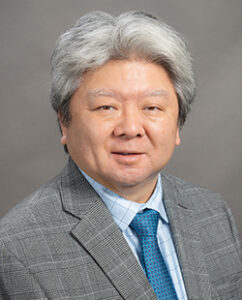
Ryutaro Hirose, MD
Professor and Roger K. Giesecke Endowed Chair in Transplant Surgery
Chief of the Division of Transplant Surgery
Surgical Director, UW Medicine Transplant Institute
Interim Chief, Pediatric Transplant Surgery
Seattle Children’s Hospital